In 1936, Mabel Dodge Luhan donated a house on La Posta Road to help bring hospital care to Taos. The Sisters of the Holy Family of Nazareth operated the small hospital, caring for a community whose needs would grow and change over the decades. Ninety years later, that donated home has become part of the story of Holy Cross Medical Center, a healthcare network serving families throughout northern New Mexico.
Holy Cross’s six outpatient clinics offer a wide array of services and specialized care right here in Taos. Alongside childhood checkups and pregnancy care, patients can access pacemaker checks, preventative visits, varicose vein procedures, kidney stone treatment, podiatry services, and orthopedic joint replacement. These are just a few examples of the care available locally, offering options that rural communities cannot always count on finding close to home.
“Some patients assume they need to travel out of town for specialized care, when they may be able to receive that care right here,” Amelia Espinoza, a Holy Cross clinic supervisor said. “Helping patients access the services they need while staying close to their families and support systems is something we take great pride in.”
For patients and families, local access can mean less time away from work, fewer travel expenses and the comfort of having family and friends nearby.
Holy Cross Orthopedics and Taos Orthopaedic Institute, with a Taos clinic on Gusdorf Road, treat conditions affecting the shoulder, hip, knee, and foot and ankle. Sports medicine services support people recovering from injuries and returning to activity.
Care includes treatment for arthritis, fractures, ligament and tendon injuries, and other conditions that interfere with daily life. Options range from injections and rehabilitation planning to joint replacement and other surgeries when appropriate.
Holy Cross is expanding into additional orthopedic specialties and strengthening its relationship with Taos Orthopaedic Institute to broaden local access.
At Holy Cross Primary Care, the focus is on building an ongoing relationship with a practitioner who can help with preventive care, everyday concerns and management of ongoing conditions. The team also works with specialists to coordinate treatment.
“We are deeply invested in the community we serve and have a shared goal of providing not only primary care but also co-management of care with external specialists to support accessibility,” said Zena Olguin, a Holy Cross clinical supervisor.
With four providers and practitioners and another expected to begin accepting patients in the next few months, the clinic is working to meet the continuing need for primary care in Taos. Teamwork, expanded training and improvements supported by Holy Cross’ new electronic medical record system are also helping increase patient capacity.
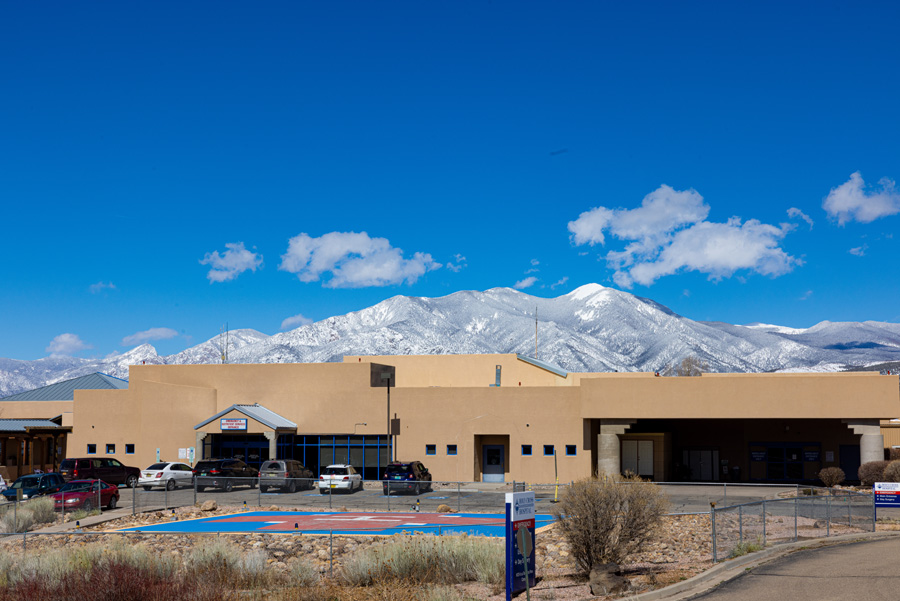
Holy Cross Surgical Specialties, located next to the hospital, brings together general surgery, urology, vein therapy and podiatry. Patients can receive consultations and treatment for concerns ranging from hernias and gallbladder problems to kidney stones and urinary conditions. Services also include varicose vein procedures and podiatry care for foot and ankle concerns.
The clinic connects evaluations, procedures and follow-up care. For appropriate general surgery procedures, surgeons use the hospital’s da Vinci 5 robotic surgical system to support minimally invasive techniques.
On Gusdorf Road, Holy Cross Women’s Health Institute provides care through different stages of life, including preventive visits, pregnancy care and treatment of gynecologic concerns.
Its two OB/GYN physicians also offer gynecologic surgery, including minimally invasive hysterectomy using the hospital’s da Vinci 5 system. The clinic has helped address the local primary care shortage by providing preventive and primary care services as well. Recent state support will help the institute recruit additional practitioners to better meet community needs.
Holy Cross Cardiology, in the Taos Professional Building on Weimer Road, helps patients understand and manage their heart health. Services include heart rhythm monitoring, pacemaker checks, heart failure care and testing to guide treatment.
The clinic is supported by advanced imaging at Holy Cross Hospital, including the Philips Incisive and GE Revolution Vibe CT scanners. The Vibe is designed to capture detailed heart images within a single heartbeat, including in some patients whose irregular heart rhythms make imaging more challenging.
HeartFlow Plaque Analysis adds another resource, using artificial intelligence to examine coronary CT images and help clinicians assess plaque buildup in the arteries supplying the heart. Together, these tools provide information that can help patients and practitioners make decisions about care.
For families with children, Taos Clinic for Children & Youth on Weimer Road offers preventive care, evaluation of childhood illnesses and support as children grow. Two physicians and two certified pediatric nurse practitioners serve local families. Circumcisions are also among the services available through the clinic.
The clinic is accepting new patients and offers same-day appointments, giving families a local option when a health concern needs prompt attention.
Making care available at each of these locations takes an entire team. Alongside practitioners and nurses, medical assistants prepare patients for visits, front desk employees manage appointments and questions, and coordinators help connect the many steps involved in treatment. A single visit may depend on several people working together, often behind the scenes, to help a patient get the care they need.
“So much of what our team does happens quietly, without recognition, but it makes a meaningful difference to patients and their families every day,” Espinoza said.
These employees are an essential part of local healthcare. They balance busy schedules, ongoing training and the needs of patients who may be worried or feeling unwell. Patience and respectful communication help create a supportive environment for everyone and recognize the people whose daily work keeps these clinics running.
Supporting that teamwork is Holy Cross’s new electronic medical record system, which is helping its outpatient clinics and hospital coordinate care more effectively. Work with other local clinics and providers is ongoing as teams improve communication between different medical record systems. Building these connections takes time and collaboration, but the effort will bring lasting benefits to the region, including better coordination among providers, smoother transitions for patients and a stronger healthcare safety net.
Building on the current range of services, Holy Cross is working to close remaining gaps in local care. Recent surveys highlight growing demand for primary care and Taos lacks a dedicated urgent care clinic. A Medical Office Complex now under construction next to Holy Cross Hospital will help address both needs, expanding primary care capacity and adding urgent care as another option for residents to receive care close to home. With further expansions possible in the future, the Medical Office complex could be home to additional specialized services not currently available locally.
“Our teams are doing an incredible job caring for our community, but we know there is a growing need for greater access to care in our community,” said James Kiser, CEO of Holy Cross Medical Center. “Our most recent Community Health Needs Assessment identified urgent care and expanded primary care as two of the region’s greatest needs. The new medical office complex being constructed on our hospital campus will help us address both priorities, streamline access to services, and further improve the quality of care we provide to the communities we serve.”
Ninety years after Holy Cross began in a donated home, its growth continues to reflect the needs of the region it serves. Expanding local services and improving how care teams work together can help more residents receive treatment without the added burden of traveling far from home. For families throughout northern New Mexico, the goal is better access to dependable care, supported by people who know and serve their community.